Newest Articles
The anterior cruciate ligament (ACL) is a strong band of connective tissue inside the knee joint that connects the femur (thigh bone) to the tibia (shin bone). Its primary role is to help stabilize the knee by preventing excessive forward movement and rotation of the tibia. Unlike muscles, ligaments like the ACL are not designed [..]
Cumulative trauma disorders (CTDs) are a broad diagnostic category characterized by musculoskeletal injuries that develop gradually due to microtraumas that cannot fully heal because of repeated stress, force, or awkward postures over time. Since many occupations and hobbies involve repetitive motions, CTDs commonly affect the arms and hands. Examples include:
Carpal tunnel syndrome results from [..]
Lumbar spinal stenosis is a condition caused by the narrowing of spaces within the lower spine, which can compress either the spinal cord or nerve roots. This pressure can lead to pain, numbness, or weakness—either locally or radiating down the legs—especially during activities that involve spinal extension (e.g., bending backward or prolonged standing) or compressive [..]
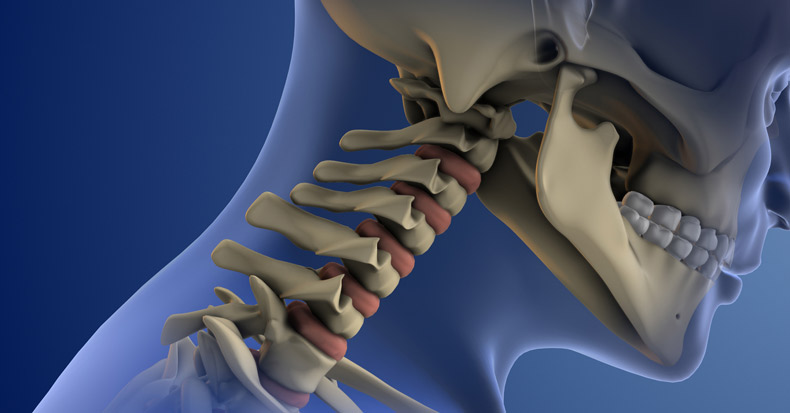
Neck pain is a leading cause of disability worldwide, and after low back pain, it’s the second most common reason people seek chiropractic care. In the past two decades, a new contributor to neck pain has emerged: text neck syndrome, a condition linked to prolonged use of smartphones and other digital devices.
Text neck syndrome [..]
In April 2025, an important study was published in the journal Medicina, titled (1):
Dynamic Cycle of Low Back Pain:A 17-Year, Population-Based Study Analyzing the National Health Insurance Service Data in South Korea
The objective of this study was to describe the long-term recurrence patterns and healthcare utilization associated with low back pain (LBP) in [..]
Carpal tunnel syndrome (CTS) is caused by compression of the median nerve as it passes through the wrist, leading to pain, numbness, tingling, and even weakness in the palm and the thumb, index, middle, and radial (thumb-side) half of the ring finger. Because the symptoms often develop slowly and intermittently, individuals frequently ignore them or [..]
Sciatica refers to pain that radiates along the path of the sciatic nerve, which extends from the lower back through the hips and buttocks and down one or both legs. The most common cause of sciatica is lumbar disk herniation, which compresses or irritates one of the nerve roots that make up the sciatic nerve. [..]
Whiplash-associated disorders (WAD) refer to a group of symptoms that can arise after the rapid acceleration and deceleration of the head and neck—most commonly during rear-end automobile collisions. Of the many whiplash symptoms, neck pain is the most frequently reported. However, the neck is a complex structure composed of various components that can be affected [..]
The prostate is a gland found in biological males, roughly the size of a walnut. It sits just below the bladder and in front of the rectum, and its primary role is associated with sexual reproduction. Prostate cancer will develop in approximately 1 in 8 men during their lifetime. Although it typically progresses slowly and [..]
It’s estimated that approximately 7.5% of the global population experiences at least one episode of low back pain each year, contributing significantly to healthcare costs and lost productivity. Most cases of low back pain are classified as non-specific, meaning there is no identifiable underlying pathology such as an infection, tumor, osteoporosis, or inflammatory disorder. Rather, [..]
Cervicogenic headache is a secondary type of headache resulting from dysfunction in the neck region. Currently, the prevailing theory in research on how this form of headache occurs is that mechanical problems—such as sprains or strains, disc herniations, or degenerative arthritis—irritate one or more of the upper cervical spinal nerves (typically C1–C3), and this irritation [..]
The United States National Library of Medicine (NLM) is the world’s largest biomedical library and the leader in research in computational health informatics (1):
“NLM is part of the National Institutes of Health (NIH), U.S. Department of Health and Human Services, and located in Bethesda, Maryland.”
“NLM plays a pivotal role in translating biomedical research [..]